
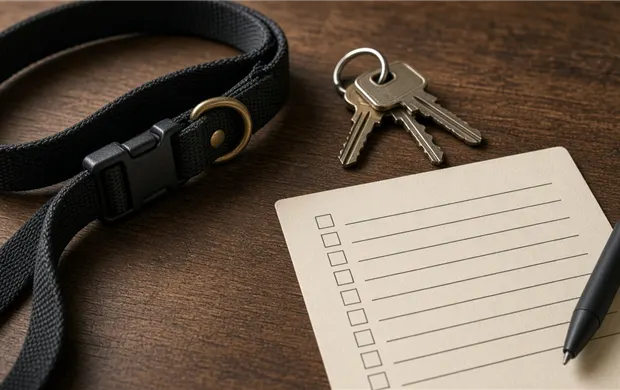
1. Create a baseline
- Reset only the bowl and portion plan you understand, and leave fancy extra treats locked until the feeding visit is stable. If a friend offers a new feeding trick in the doorway, write it as a later test instead of changing the live kit at Buddy Pet Services.
- Choose a repeatable test window with a short kitchen check, a water-bowl refill, and one leash prompt. Maya Chen would rather see one honest comparison than three half-finished portion swaps.
- Write down the starting bowl set and portion size, then rate the first five minutes on a simple support scale. If the number drops after a second-hand scoop, Jordan Hale wants that note on the care card.
- Test one change per visit when you do adjust the baseline, then leave the rest of the house alone until the new bowl spot or portion holds.
- Copy an owner-provided medicine reminder onto the same baseline card only as a reminder, never as a new dose or a diagnosis. Sofia Alvarez and Ben Carter both want that line labeled owner-provided.
2. Check bowls, portions, and house access
- Adjust food and water bowls separately when the pet eats unevenly, and reseat the water dish if it tips during the kitchen check. Sofia Alvarez wants that refill done before you leave the house.
- Test leash fit only if the walk feels late or the clip jumps ahead of the live call from the staff. Loosen and reseat the leash during a water stop, then confirm the hook again.
- Review portion marks and bowl-to-water coverage before changing several scoops at once. Ben Carter would rather keep a known bowl-and-portion pair than stack two new sizes on the same care card.
- If a spare key slips after the first house walk, fix the key hook and the leash together at the door, then return to the same home.
- Write which door the spare key opens and where the leash hangs so a late arrival at 330 W 9th St still starts from the same honest access line.
3. Review leash, spare key, and owner-provided reminders
- Confirm leash length, spare-key style, bowl feel, and water option so a three-hour block stays comfortable. If the bowl sits empty after four p.m., shift the spare-kit step before you leave, not at minute forty.
- Check whether important cues rely on memory alone, then add a spare-key note if the main kit hides a stuck lock. Jordan Hale wants the spare visible on the key hook at Buddy Pet Services.
- Use a new pocket order for favorite home items when the default bag layout makes repeated feeding actions uncomfortable. Keep one spare key for live return so you do not miss the restart after water.
- After the visit, rinse the bowls and wipe the leash clip before they go back in the bag. Spare-key care is part of the home, not a bonus after you already leave 330 W 9th St.
- If the owner left a medicine reminder, copy the time and the owner’s wording only. Maya Chen and Ben Carter both treat that line as owner-provided, not as a new care decision.
4. Save a working profile
Keep the version that feels predictable across a three-visit week, and Jordan Hale, Maya Chen, Sofia Alvarez, and Ben Carter recommend saving bowls, portions, leash, and spare key on one card. If a 4 September staff sheet changes portion rules or key location, update the card before you reuse a 18 June home note.